














How to Rank in ChatGPT, Perplexity & AI Search in 2026
Introduction
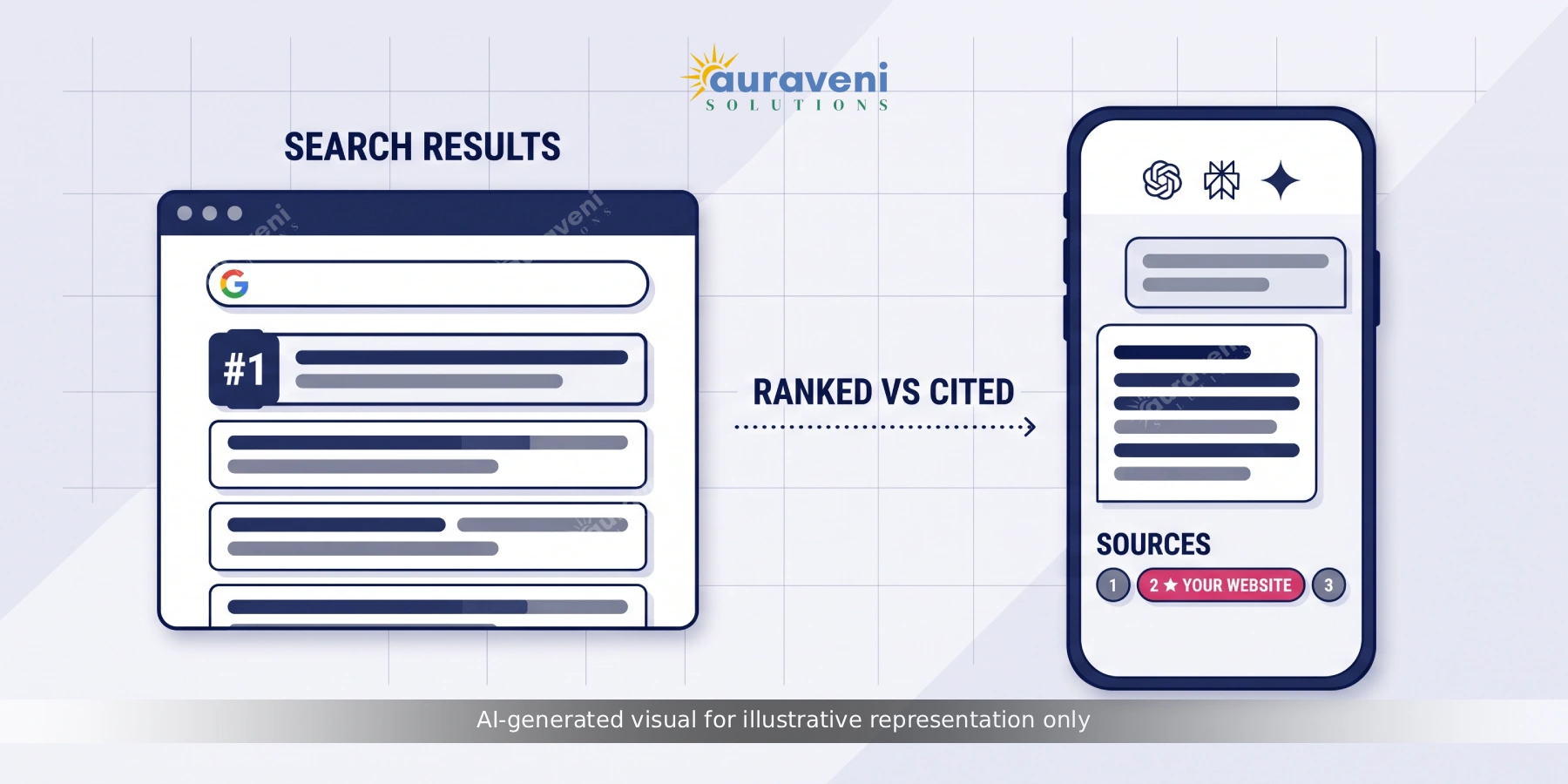
Here's a statistic worth sitting with: the overlap between what ranks in Google's top ten and what gets cited in AI-generated answers has fallen from around three-quarters in mid-2025 to somewhere between 17% and 38% in early 2026, depending on which platform you're measuring. Ranking first on Google, in other words, no longer means much for whether ChatGPT or Perplexity mentions you when someone asks a question in your space.
That's a genuinely disruptive shift for any business that's spent years building an SEO strategy around one scoreboard. It's also, if you catch it early, a real opportunity — because right now, only around 14% of marketers are actively tracking AI search performance at all. Most of the competitive field hasn't started paying attention yet. This article covers what's actually driving citation decisions across the major AI engines in 2026, and what a business can realistically do about it.
Why This Suddenly Matters More Than Your Google Ranking
The scale involved is no longer a rounding error. ChatGPT alone serves several hundred million weekly active users, with a meaningful share of them explicitly using it as a search engine rather than just a chat tool. Perplexity processes over a billion queries a month with a citation-forward format that shows sources directly in the answer. Google's own AI Overviews now appear across a large share of search queries, frequently answering the question directly on the results page without requiring a click through to any website at all.
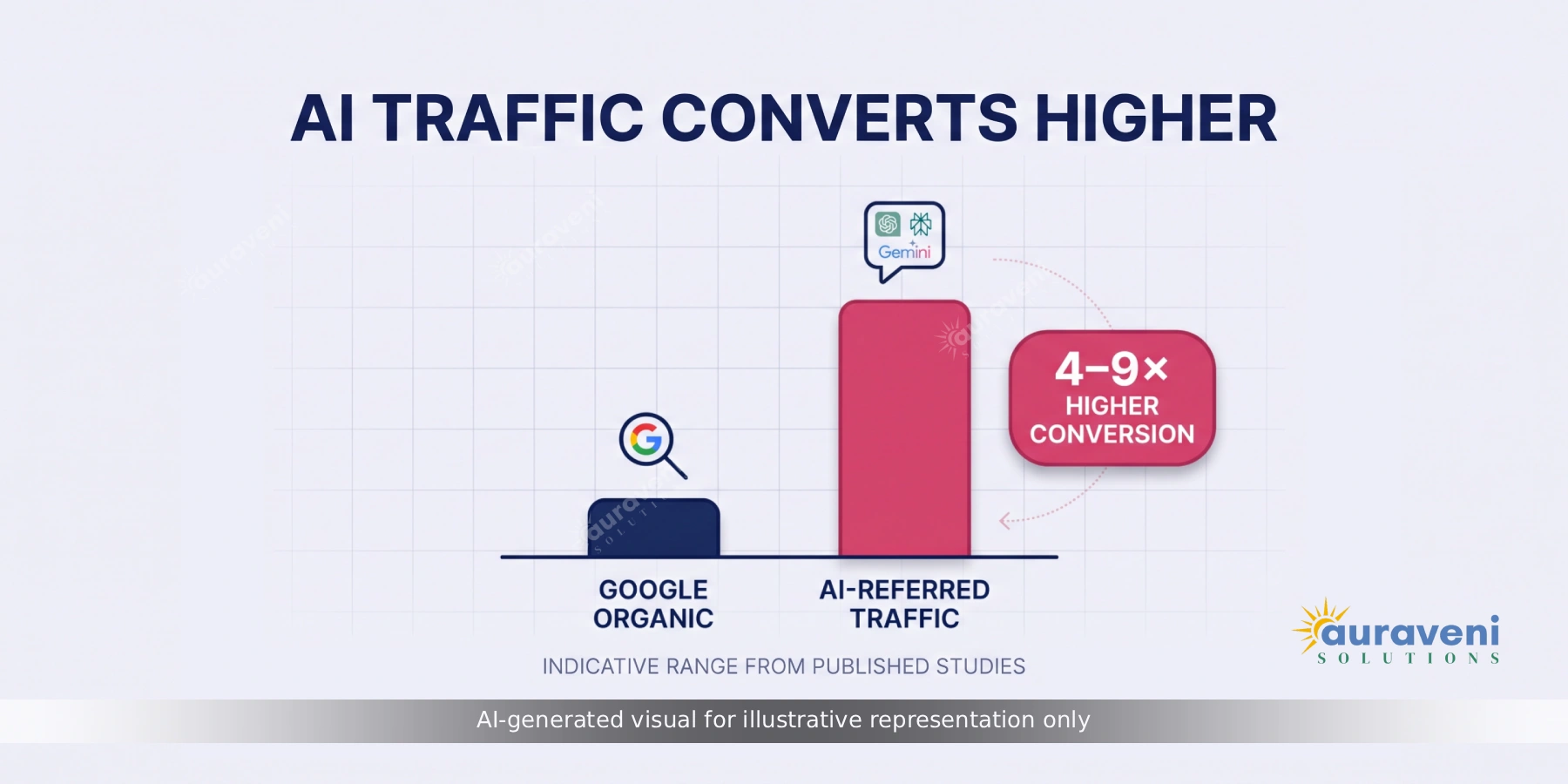
The part that should really get a business's attention, though, is what happens when someone does click through from an AI answer. Traffic referred from AI platforms is converting at dramatically higher rates than traditional organic search — multiple independent analyses put AI-referred conversion somewhere in the range of four to nine times higher than standard Google organic traffic. People arriving from an AI citation have typically already had their question partially answered and are already convinced enough to click through for more, which is a fundamentally different, higher-intent visitor than someone scanning ten blue links.
How Each AI Engine Actually Chooses What to Cite
This is the part most generic advice skips, and it matters because the engines genuinely don't work the same way. Research analysing citation overlap found that only around 11% of domains get cited by both ChatGPT and Perplexity — meaning a strategy tuned for one platform doesn't automatically transfer to the other.
- ChatGPT's real-time search runs on Bing's index, which makes Bing Webmaster Tools submission a genuine prerequisite, not an optional extra — a step most SEO teams still skip because they've only everthought about Google. ChatGPT's citations also lean heavily toward established, encyclopedic authority; Wikipedia alone accounts for a striking share of its top citations. New content typically takes four to eight weeks to start surfacing in ChatGPT's answers after publication.
- Perplexity is the most retrieval-driven and recency-weighted of the major engines, and it shows the highest correlation with Google's own top-ten rankings among the AI platforms — meaning solid traditional SEO fundamentals transfer more directly here than anywhere else. Fresh, well-structured content can start appearing in Perplexity's citations noticeably faster than on ChatGPT, sometimes within a month or two of publication.
- Google's AI Overviews, unsurprisingly, correlate most strongly of all with Google's own organic rankings — the AI layer is largely built on top of the same ranking signals Google has always used, which means the SEO fundamentals you already know still carry real weight here specifically.
- Claude and Gemini are the fastest-growing platforms in raw traffic share terms right now, with both showing triple-digit year-over-year growth as more people diversify away from a single AI tool. Neither has published detailed citation-selection criteria, but both draw on the same underlying signal categories — structure, clarity, and demonstrable authority — that drive the other engines.
The Content Structure That Gets Selected
One specific, well-supported finding is worth building an entire content strategy around: a large share of LLM citations — estimates put it around 44% — come from roughly the first third of a page. AI engines extracting an answer overwhelmingly favour content that states the answer plainly near the top of a section, then elaborates below, rather than content that builds up to a conclusion after several paragraphs of throat-clearing.
Practically, this means: lead each section with a direct, standalone sentence that answers the implied question, before adding supporting detail. Use clear, descriptive headings that match how someone would actually phrase a question, since these get extracted as chunk boundaries. Keep individual claims specific and factual rather than vague or promotional — AI engines are specifically tuned to deprioritise marketing language like "best-in-class" or "industry-leading" in favour of concrete, checkable statements. And structure comparison or list content with genuine clarity (tables, numbered steps, clearly labelled options) since this format extracts cleanly, while dense narrative paragraphs covering the same information often don't.
Technical Foundations Most Sites Are Still Missing
A handful of technical basics show up repeatedly as the difference between sites that get cited and sites that don't, and none of them require a rebuild:
- Bing indexing, as mentioned, is non-negotiable for ChatGPT visibility specifically, and it's a five-minute setup that most businesses have simply never done because their SEO focus has only ever been Google.
- Clean, crawlable page structure — proper heading hierarchy, fast load times, and content that isn't hidden behind heavy client-side rendering the crawler has to execute JavaScript to see — matters more here than it does for a human visitor who'll wait a couple of extra seconds for a page to load.
- A consistent named author with real credentials, displayed clearly on the page, is one of the more consistently cited trust signals across every major AI engine's stated preference for authoritative sources. An anonymous or generically-attributed blog post is competing at a real disadvantage against one with a named expert behind it.
- Freshness signals that are genuinely true, not cosmetic. A visible "last updated" date that reflects an actual, meaningful content refresh — not just a date stamp changed without any real edit — correlates with materially better citation rates, particularly on Perplexity specifically, given how heavily it weights recency.
Schema Markup and Structured Data: Doing It Properly
Structured data — specifically Article, FAQPage, and BreadcrumbList schema implemented as valid JSON-LD — gives AI crawlers an explicit, machine-readable map of a page's content, author, and question-answer structure, rather than forcing them to infer it from raw HTML. This doesn't guarantee citation on its own, but it removes friction from the extraction process, and every major engine's documentation on structured content treats it as a meaningful positive signal.
FAQ schema specifically deserves attention because it maps almost perfectly onto how people actually phrase queries to a conversational AI. A well-written FAQ section, marked up correctly, is essentially pre-formatted for exactly the query-and-answer pattern these engines are built to serve.
What GEO Doesn't Replace
It's worth being direct about this, because the framing of "GEO versus SEO" gets exaggerated in a lot of marketing content: the two aren't competing disciplines. Research into citation patterns consistently finds that a large majority of what makes content GEO-friendly is simply good, fundamental SEO — clear structure, genuine authority, technical crawlability, and content that actually answers the question it's targeting. The overlap between Bing's top results and ChatGPT's citations, and between Google's organic top ten and its own AI Overview citations, is high enough that a business skipping SEO fundamentals to chase GEO tactics is optimising for a layer that sits on top of a foundation it hasn't built yet.
GEO is the additional layer of discipline — platform-specific structural awareness, freshness maintenance, and citation-friendly formatting — built on top of SEO that's already sound, not a replacement for it.
Measuring Whether Any of This Is Working
Tracking AI citation is genuinely less mature than tracking Google rankings, and it's fair to say the tooling is still catching up. In the meantime, a business can reasonably track this manually: running a set of target queries directly through ChatGPT, Perplexity, and Google's AI Overview periodically and noting whether and how the business gets mentioned; checking referral traffic sources in analytics for AI platform referrals, which are increasingly distinguishable from generic direct traffic; and watching for branded search increases that often follow an AI citation, since people frequently search a brand name directly after seeing it mentioned in an AI answer.
Given how early this measurement discipline still is industry-wide, a business doing even basic manual tracking consistently is ahead of the roughly 86% of marketers who currently aren't tracking this at all.
How Auraveni Approaches AI Search Visibility
Every blog we publish — including this one — is structured with the specific goal of being extractable: direct answers near the top of each section, genuine FAQ content marked up with proper schema, a named author, and honest, specific claims rather than promotional filler. We treat GEO as exactly what the research shows it to be: a layer built on top of solid SEO fundamentals, not a separate discipline that lets a business skip them.
If you're building out a broader content strategy and want the technical SEO fundamentals covered as part of that conversation, our guide on what to look for in a software development partner touches on how technical delivery quality underpins everything else a marketing strategy depends on.
Conclusion
The gap between ranking on Google and being cited by AI is real, it's measurable, and it's moving fast enough that strategies built purely around traditional SEO are already leaving real, high-converting traffic on the table. The good news is that what actually works — clear structure, genuine authority, honest and specific content, proper technical foundations — is mostly an extension of good practice that was already worth doing, not an entirely new discipline to learn from scratch. The businesses getting ahead right now are simply the ones paying attention while most of the field still isn't.
If you want a straight read on how your current content is performing across AI search and where the easiest wins are sitting, we're glad to walk through it with you.
